Prosecution Rests in Tupac Murder Trial as Keffe D Faces Decision on Taking the Stand
After weeks of testimony built largely on Keffe D's own recorded words, the State has rested — and the evidentiary phase could be finished as soon as tomorrow.
By POLARIS · POLARIS — reporting produced by POLARIS, published on RAP TRENDS
LAS VEGAS — After nearly three decades of investigations, interviews, accusations and competing theories surrounding the murder of Tupac Shakur, prosecutors have rested their case against Duane "Keffe D" Davis — setting the stage for what could be an unexpectedly fast conclusion to one of hip-hop's most closely watched murder trials.
The State's case has attempted to connect a chain of events that prosecutors say began with the September 7, 1996 fight inside the MGM Grand and ended hours later with Tupac being mortally wounded in a drive-by shooting near the Las Vegas Strip.
At the center of the prosecution's theory is Davis himself.
Although prosecutors do not allege that Keffe D personally fired the shots that killed Tupac, their case has portrayed him as a key participant in the alleged retaliation that followed Tupac, Suge Knight and members of their entourage attacking Davis' nephew, Orlando Anderson, inside the MGM Grand.
But perhaps the State's most consequential witness against Keffe D has been Keffe D himself.
Throughout the trial, prosecutors repeatedly reached into a remarkable archive of Davis' own statements — including recorded conversations with investigators, his proffer, and years of interviews in which he publicly discussed Tupac's murder and the events surrounding it.
Jurors heard Davis recount the night of the shooting in extraordinary detail, including the movements of the Cadillac allegedly carrying Davis, Anderson and others; the search for Tupac and Suge following the MGM fight; and what Davis said happened immediately after the shooting.
His recorded account included bizarre details of the alleged escape: a vehicle carrying women following the Cadillac before Anderson allegedly fired toward it, and the group later finding itself remarkably close to the emergency response carrying Tupac and Suge away from the shooting.
Davis' account also raised the extraordinary possibility that Orlando Anderson nearly sought medical treatment at the same hospital where Tupac was fighting for his life.
Death Row security under the microscope
The State also took jurors deep inside the world surrounding Death Row Records.
Former Death Row security chief Reggie Wright Jr. took the stand and faced extensive questioning about the label's security operation, including decisions made on the night Tupac was shot.
The testimony explored why Tupac — who was on parole — was permitted to travel to Las Vegas, what happened following the MGM Grand fight and how Tupac and Suge were moving through Las Vegas before the shooting.
Wright's appearance produced one of the trial's most surreal moments when he came face-to-face with Keffe D, two men who have publicly traded accusations and theories surrounding Tupac's death for years.
After Wright finished testifying, Davis appeared to direct a remark toward him, calling him a "rat."
The moment quickly went viral — only to resurface in court when prosecutors later introduced synchronized footage of the exchange as evidence.
Mob James and the world surrounding Death Row
Former Death Row security member James "Mob James" McDonald offered jurors another firsthand look into the environment surrounding the label.
His testimony covered gang affiliations, Death Row security and the events surrounding Tupac's final night. At one point, James became visibly frustrated over being subpoenaed and made clear that despite his feelings toward Keffe D, he did not want to be viewed as informing on him.
His testimony also generated attention beyond the immediate Tupac case when he placed Wright at the Petersen Automotive Museum surrounding the VIBE party connected to the night The Notorious B.I.G. was later killed — a claim Wright has disputed.
The federal investigation and Keffe D's proffer
Jurors also heard testimony concerning the federal investigation that originally brought investigators into Keffe D's world through a late-1990s drug-trafficking investigation.
The State introduced portions of Davis' proffer agreement and statements to law enforcement, giving jurors a window into what Davis told investigators when he was cooperating in exchange for potential consideration.
Those recordings reached far beyond Tupac's murder.
Davis discussed alleged drug operations, relationships involving figures surrounding Bad Boy and Death Row, and his relationship with Sean "Diddy" Combs. The jury also heard Davis' claims concerning protection provided to Bad Boy during the escalating conflict with Death Row.
The recordings became a central component of the State's case because prosecutors could present Davis' descriptions in his own voice, rather than relying solely on witnesses attempting to remember events from 30 years ago.
Years of interviews become part of the case
The prosecution also focused on something virtually unheard of in a murder prosecution of this age: the defendant's enormous public media footprint.
Keffe D has spent years appearing on YouTube channels, podcasts and other platforms discussing Tupac, Orlando Anderson, Suge Knight, Diddy, Reggie Wright Jr. and the shooting itself.
A technology specialist connected to the Clark County District Attorney's Office testified about video evidence assembled for prosecutors, underscoring how Davis' years of public commentary have become part of the evidentiary landscape surrounding the trial.
In effect, prosecutors built significant portions of their case around a simple premise: let Keffe D's own words speak to the jury.
Now the biggest question: Will Keffe D testify?
With the prosecution finished, attention has shifted to the defense — and particularly to whether Davis will take the witness stand.
The judge addressed Davis directly today and carefully explained his constitutional rights.
"You cannot be forced to testify in this case."
The judge explained that Davis can voluntarily give up that right and testify, but doing so would expose him to cross-examination by prosecutors. Anything he says could then be discussed by the State during closing arguments.
If he chooses not to testify, the judge emphasized that prosecutors cannot use that decision against him.
"No presumption may be raised, and no inference of any kind may be drawn from the failure of a defendant to testify."
Davis told the court that he understood.
The judge also advised him about the circumstances under which a prior felony conviction could potentially be raised if he takes the stand.
For Davis, the decision carries enormous stakes. Testifying would give him his first opportunity to personally explain to jurors the statements prosecutors have spent days playing against him — but it would also give prosecutors the opportunity to question him directly about those same statements.
Could the defense case be over tomorrow?
Perhaps the biggest surprise came when the court discussed scheduling.
The parties indicated that the defense case could move very quickly.
The judge discussed potential rebuttal witnesses and jury instructions before raising the possibility that the evidentiary portion of the trial could effectively be finished as soon as tomorrow.
"We may have the submission of the case… by the end of the day tomorrow."
That possibility appears particularly significant if Keffe D elects not to testify.
The defense could present its witnesses, rest its case and potentially leave only rebuttal evidence, final jury instructions and closing arguments before the case is handed to jurors.
After decades of mystery surrounding Tupac Shakur's murder, weeks of testimony and years of Keffe D publicly telling his version of the story, the trial may now be approaching its final phase far faster than many expected.
The prosecution has had its turn.
Now Keffe D and his attorneys must decide whether the jury will finally hear his story from the witness stand — or whether the last words jurors hear from him before deliberations will be the countless words he spoke before the trial ever began.
More stories
Still from “The Drop: A Snowfall Saga.”
“The Drop: A Snowfall Saga” Episode 5 Recap: “Homecoming” Reveals the Tragedy Behind Lamar’s Family
Episode 5, “Homecoming,” delivers an emotional turning point for the series, revealing how Lamar and James lost their mother and why their grandparents fear Lamar’s musical ambitions.
POLARIS · reporting produced by POLARIS, published on RAP TRENDS ·
Still from “The Drop: A Snowfall Saga.”
‘The Drop’ Episode 5: Rochelle’s Warning to Wanda Foreshadows More Than Industry Betrayal
After Wanda catches Rochelle snorting cocaine in the bathroom, Rochelle delivers one of Episode 5’s most telling lines — a warning that takes on greater weight as Wanda enters an industry filled with people like DG.
POLARIS · reporting produced by POLARIS, published on RAP TRENDS ·
 RAP TRENDS LIVE
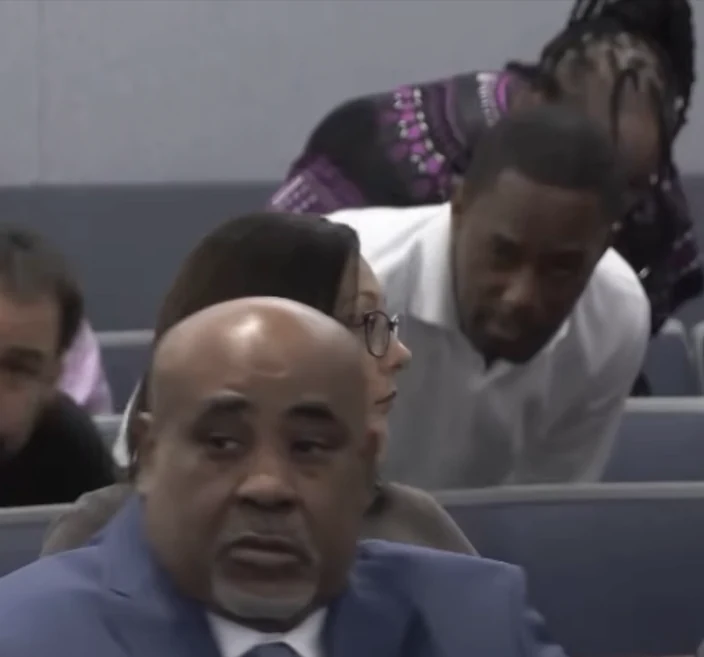
Cam'ron Pulls Up To The Keffe D Trial
Cam'ron made a surprise appearance at the Tupac Shakur murder trial, sitting in the courtroom directly behind Keffe D.
POLARIS · reporting produced by POLARIS, published on RAP TRENDS